
Starting a business often means navigating unfamiliar territory while making high-stakes decisions in real time. Entrepreneurs must build products or services that meet complex and evolving customer needs, manage cash flow, grow teams and respond to shifting market conditions, often all at once. And they must do it in an environment where the odds are not always in their favour.
In South Africa, small businesses play a vital role in the economy, contributing significantly to GDP and employment. Yet the path to sustainability is far from guaranteed, with estimates suggesting that between 60% and 80% of small businesses fail within their first few years of operation.
Against this backdrop, entrepreneurship can easily begin to feel like a solitary pursuit. Many founders believe they are expected to have all the answers and demonstrate constant certainty. But this expectation is often one of the biggest barriers to growth.
“The idea that entrepreneurs must navigate every challenge alone is deeply misleading,” says Allon Raiz, CEO of Raizcorp. “Asking for help is not a weakness. It is one of the most powerful leadership behaviours a founder can develop.”
The most effective entrepreneurs rarely operate in isolation. Instead, they rely on mentors, advisors and peers who have faced similar decisions before them. In many ways, this, says Raiz, reflects a form of “entrepreneurial ubuntu”, where progress and success are strengthened through community.
Globally, business leaders emphasise the importance of collaboration and seeking guidance. Entrepreneurs such as Emma Grede, co-founder of the fashion brand Good American, have spoken openly about reaching out to competitors when facing a complex business challenge. Her reasoning was simple: sometimes the person best placed to help you solve a problem is someone who has already solved it themselves.
This perspective highlights an important shift in how leadership should be understood. Asking for help is not simply about support or reassurance, it directly influences how entrepreneurs make decisions about pricing, partnerships, market entry and operational systems. Without external input, founders are often forced to make these decisions in isolation, which can limit growth, delay access to markets and reinforce inefficiencies within the business.
In the South African context, isolation is a common reality for entrepreneurs. Many operate their businesses without access to experienced mentors, banking professionals, strong professional networks or peer communities where challenges can be openly discussed. As a result, capability gaps persist, not because entrepreneurs lack ambition, but because they lack structured access to guidance and shared learning.
“Operating in isolation means having to make critical decisions without the benefit of perspective,” says Raiz. “This can lead to slower growth and costly mistakes, and missed opportunities that could otherwise have been avoided. Access to experienced mentors who have already walked the entrepreneurial path successfully, as well as peer communities of founders facing similar early-stage challenges, plays an important role in bridging the capability gap that still exists in the local entrepreneurial ecosystem.”
Learning from others accelerates understanding and helps entrepreneurs avoid reinventing the wheel. Instead of spending valuable time solving problems from scratch, entrepreneurs can draw on the experience of others and focus their energy on building resilient and commercially viable businesses.
That being said, mistakes are also a crucial part of the learning journey and an inevitable part of building a business. The challenge is ensuring those mistakes become learning moments rather than fatal setbacks.
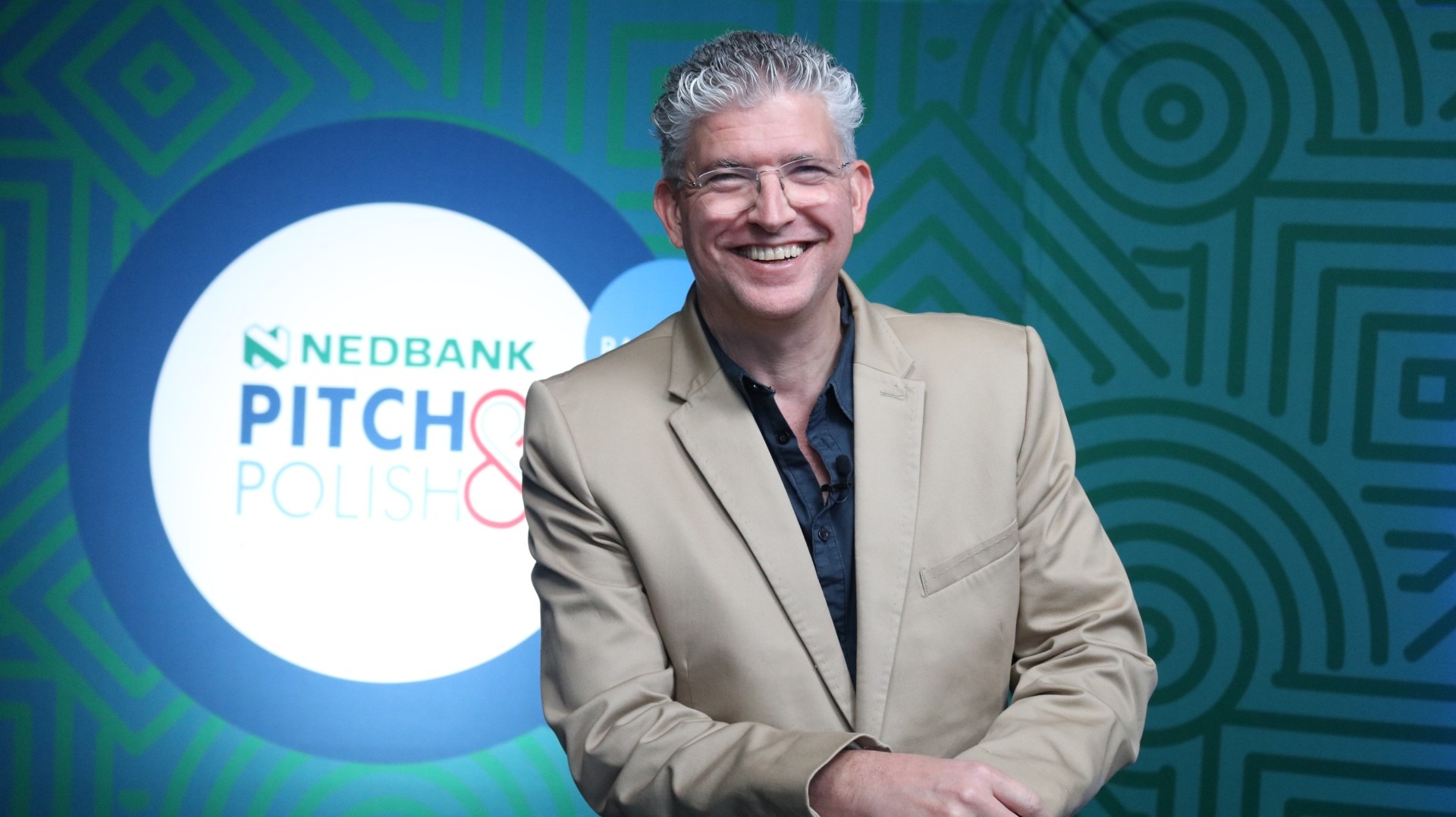
Programmes like Nedbank Pitch & Polish, powered by Raizcorp and with uMngeni-uThukela Water as a Gold sponsor, create spaces where entrepreneurs are challenged to test their assumptions, strengthen their decision-making and learn from both mentors and peers facing similar realities.
More importantly, however, these programmes create a safe environment where entrepreneurs can ask difficult questions, confront gaps in their thinking, learn from each other and develop the confidence to seek guidance in what matters most.
“Successful leadership and entrepreneurial journeys do not come from having every answer,” says Raiz. “Recognising when to seek guidance and surrounding yourself with people who help you think more clearly about the decisions you need to make is what helps build a stronger business”
As South Africa continues to look to entrepreneurship as a driver of economic growth and job creation, the focus must extend beyond funding and access to opportunity. The ability to draw on the experience of others is what ultimately determines whether businesses remain small or scale sustainably. In this context, asking for help is not a weakness, but a competitive advantage.
Florence Duval is a seasoned strategist with over 25 years of experience leading sustainability, stakeholder engagement and social impact initiatives across public and private sectors.
As CEO and founder of IN TOUCH, she guides cross-sectoral teams to deliver high-impact advisory solutions that strengthen institutions, enable public-private partnerships and secure both the legal and social licence to operate. Her expertise spans compliance, community development, issue management and sponsorship development – always anchored in sustainable development principles.
A former mining executive and committed social activist, Florence is known for her ability to build meaningful partnerships, navigate complex regulatory environments and drive transformative impact through purpose-driven leadership
Monique is a curious, serial questioner who wants to take the mystique out of business and finance to make it practical and relevant to entrepreneurs. ‘Why?’, ‘Why not?’ and ‘How can we help, for real?' are her favourite questions.
She is the Senior Manager of Segment Design and Development in Retail Relationship Banking at Nedbank, and she is responsible for ensuring that small businesses are fully supported through Banking and Beyond® solutions and most particularly as the product owner of the SimplyBiz® platform. Monique believes that keeping business strategy simple, real and practically implementable is fundamental to success. She also believes in the power of fun. If you don’t like what you’re doing, don’t do it!
Monique draws on her own entrepreneurial journeys and extensive management roles in various industries to ensure that solutions are conceptualised and delivered with small-business owners’ needs in mind.
She believes in life-long learning and being a sponge through immersions in over 300 000 businesses, various tertiary and educational programmes, and she is a YouTube and social-media hustler. In 2012 she was awarded a scholarship through Goldman Sachs UK to attend the 10 000 Women entrepreneurial programme through the Gordon Institute of Business Science, and she has been recognised with several Top Achiever Awards in Nedbank.
Allon Raiz is regarded both locally and globally as a pioneer and maverick in the business-incubation industry. He is the founder and CEO of Raizcorp which, according to The Economist, is the only genuine incubator in Africa and which currently supports over 500 businesses.
A two-times PhD dropout, Allon is the best-selling author of three entrepreneurial books. He hosted the first national radio show on entrepreneurship in South Africa in 2004; wrote and hosted the first South African prime-time entrepreneurship reality television show; and created and published an entrepreneurial cartoon strip. Allon is currently hosting his 15th season of the popular The Big Small Business Show on Business Day TV.
Allon is a co-founder of the Entrepreneurs’ Organisation South Africa and Rural Roots, and is on the advisory and judging boards of numerous local and international NGOs and entrepreneurial awards. His passion for and focus on the development of entrepreneurs attracted the attention of the World Economic Forum (WEF) which, in 2008, recognised Allon as a Young Global Leader.
As an accomplished international speaker, Allon was invited to speak at the 2011 WEF Annual Meeting held in Davos, Switzerland. In 2011, he became a member of the WEF’s Global Agenda Council on Fostering Entrepreneurship, making him one of 15 recognised global experts in the field. More recently, he became a member of the WEF’s Global Future Council.
In 2013, Allon received the Entrepreneur of the Year Award at the Oliver Transformation and Empowerment Awards. The following year, he became the country winner, regional winner and continental winner of the Titan Award for Building Nations.
Between 2014 and 2016, Allon guest lectured at Oxford University where he was recognised as the Oxford University Saïd Business School’s Entrepreneur-in-Residence.
In 2015, Allon received an invitation from the White House, on behalf of President Barack Obama, to speak at the Global Entrepreneurship Summit held in Kenya.
Nonkqubela Maliza is the director of Corporate and Government Affairs at Volkswagen Group Africa. She has held the position since 2006 and also chairs the VW Community Trust and VWSA BEE Initiatives Trust.
Prior to this, Nonkqubela was a senior executive at Metallon Corporation, a pan-African mining and financial services company with operations in South Africa and Zimbabwe. She also served as a chief director at the Department of Trade and Industry and has strong experience in the financial services sector.
Nonkqubela holds an MBA from the University of Cape Town, a BA Honours in Economics from Rhodes University and a BA in Psychology and Economics from Rhodes University.